Urinary tract infection treatment in Railay
Burning every time you pass urine, the constant feeling of needing to go again, and a nagging ache low in the abdomen. Urinary infections are more common on a trip like this — heat, dehydration, long travel days and more sex than usual all contribute. Urinary tract infection treatment in Railay takes one visit, and a urine test at the start avoids treating the wrong thing.
Typical symptoms
A straightforward bladder infection causes:
- Burning or stinging when passing urine
- Needing to go frequently, often producing very little
- Urgency that is hard to ignore
- Cloudy or strong-smelling urine
- A dull ache above the pubic bone
- Sometimes a trace of blood
Fever, back pain and feeling genuinely unwell suggest the infection has reached a kidney, which is more serious and needs treating promptly rather than over a weekend.
Why they happen more here
Dehydration is the main factor. In this heat you sweat constantly and pass less urine, so bacteria are not flushed out as often.
Railay adds a specific one: people deliberately drink less because the bathroom situation is inconvenient. A day at a crag with no facilities, or a long boat and transfer day, and the natural response is to stop drinking — which is precisely how these start.
More frequent sex is a common trigger, and so is the swimwear cycle of sitting around in a wet bikini all afternoon. Passing urine soon after sex and changing out of wet swimwear both genuinely reduce recurrence.
Testing before treating
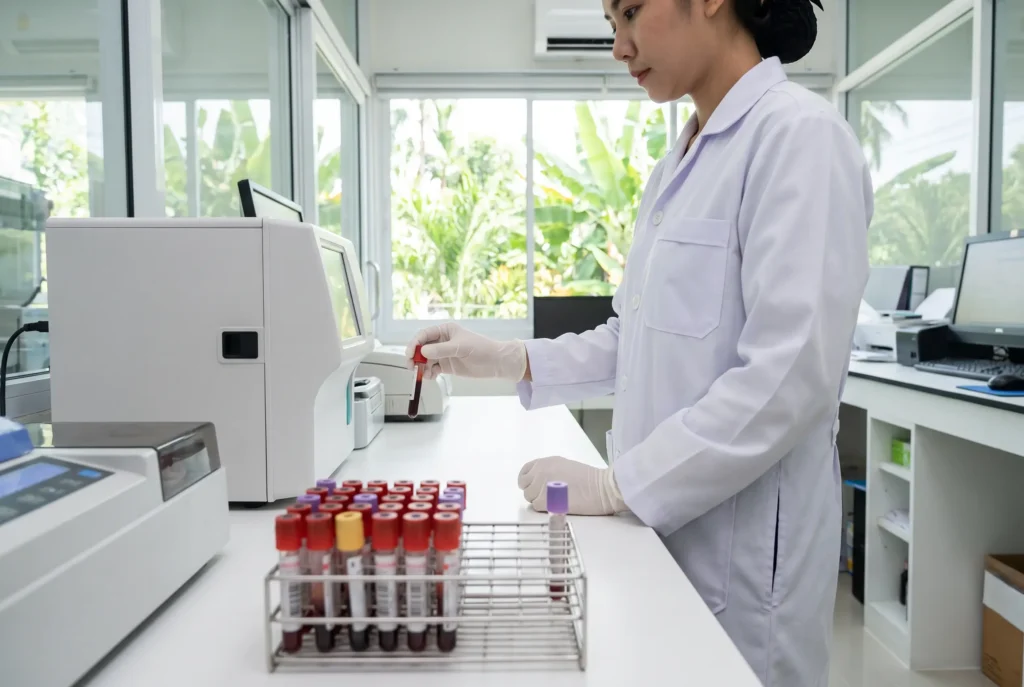
A urine dipstick takes two minutes and shows whether infection is actually present.
That matters because the symptoms overlap substantially with other things — an STD such as chlamydia, or thrush, both of which cause burning and neither of which responds to a urinary antibiotic. Treating the wrong one wastes days while the real problem continues.
Where the picture is unclear, or infections keep returning, we send a urine culture to identify the organism and confirm which antibiotic will actually work rather than guessing.
Treatment and relief
A short course of antibiotics, often three days, clears most bladder infections, and the burning usually eases within a day or two. Finish the whole course even once you feel better.
Drink plenty of water to flush the bladder. Paracetamol or ibuprofen helps the discomfort, and urinary alkalinising sachets from a pharmacy ease the burning while the antibiotics work.
Cranberry may modestly reduce recurrence but does not treat an existing infection, and relying on it instead of antibiotics is how a bladder infection becomes a kidney infection — which here means a crossing rather than a tablet.
When it is more than a bladder infection
Come in the same day if there is:
- Fever above 38C with the urinary symptoms
- Pain in the back or side, below the ribs
- Nausea and vomiting
- Shivering or feeling very unwell
- Visible blood in the urine
- No improvement after two days of antibiotics
Those suggest a kidney infection, needing stronger treatment and sometimes admission — see evacuation and hospital transfer. Urinary symptoms in men, in pregnancy, or in anyone with diabetes are assessed more thoroughly rather than treated over the counter.
Preventing the next one
If you get these repeatedly, a few habits genuinely reduce the frequency, and they matter more in this climate.
Drink enough that your urine stays pale — here that means noticeably more than at home. Do not hold on for hours because a bathroom is inconvenient; that is the single most avoidable cause on a climbing or boat day. Pass urine within fifteen minutes after sex. Get out of wet swimwear rather than letting it dry on you. Wipe front to back.
What does not help, despite frequent recommendation, is douching or scented washes, which disturb the normal bacterial balance. If you get three or more infections a year, that is worth investigating properly — and a health check up including glucose is sensible, since recurrent urinary infections are occasionally the first sign of undiagnosed diabetes.
Frequently asked questions
How much does treatment cost?
A consultation with a urine dipstick and short antibiotic course is inexpensive. A urine culture costs more and is used when infections recur or the diagnosis is unclear.
Can I buy antibiotics at a pharmacy instead?
You can, but without a test you may be treating the wrong condition entirely, and the wrong antibiotic will not work. A two-minute test avoids several wasted days.
Can a doctor come to me?
Yes. A doctor resort visit can test a sample in your room and supply the treatment.
How fast will I feel better?
Most people improve within 24 to 48 hours of starting antibiotics. If nothing has changed after two days, come back rather than finishing the course and hoping.
Can I swim?
Once treatment has started and you feel better, yes. Change out of wet swimwear promptly, since sitting in it is a common reason these recur.
Is it caused by sex?
Not exactly — it is caused by bacteria reaching the bladder, and sex is one common way that happens. It is not a sexually transmitted infection and does not mean a partner has anything.
A nurse-led clinic, part of the Takecare network
Takecare Clinic Railay is staffed by experienced English-speaking nurses, and works together with Doctor Ao Nang Takecare Medical Clinic in Ao Nang. The two clinics share doctors, records and treatment plans, so a doctor is involved whenever one is needed — reviewing a case, prescribing, or coming over to Railay — and care started on the peninsula continues without repetition if you cross to the mainland. It also means a second clinical opinion is a phone call away rather than a boat ride.
Come in, or we come to you
Takecare Clinic Railay is open 8am–10pm daily on Railay, and reachable 24 hours by phone, WhatsApp and Line — so if something happens after we close, message rather than wait until morning. Walk in without an appointment, call +66 81 718 9080, message WhatsApp or Line. If you would rather not move, ask for a doctor resort visit and we will come to you. For anything that cannot wait for a boat, see evacuation and hospital transfer.