Sprained ankle treatment in Railay
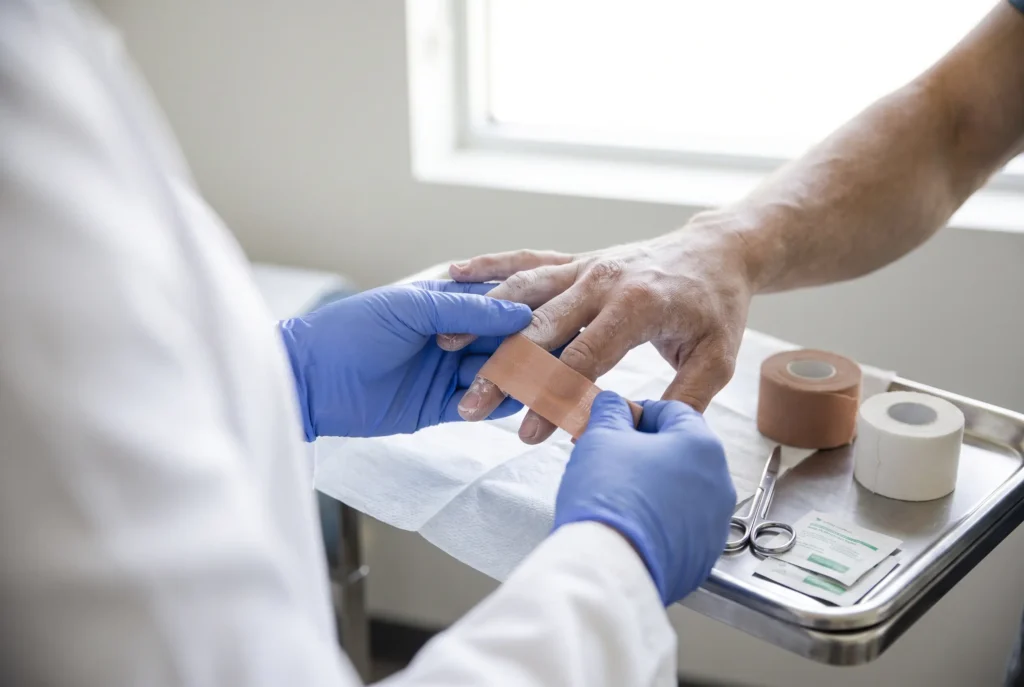
You came off low, landed awkwardly on the pad edge, and the ankle rolled. Or you slipped on the polished limestone step down from the crag in flip-flops. Either way you are now several hundred metres of sand and rock from anywhere, on a peninsula with no vehicles. Sprained ankle treatment in Railay starts with the question that actually matters: is this a sprain, or is it broken?
Sprain or fracture — how the decision is made
There are well-established rules for this, and they are better than guesswork or bravado. What matters is whether there is bone tenderness at specific points on the ankle and foot, and whether you can take four steps immediately after the injury and at assessment.
If you can weight it and there is no tenderness over those specific bony points, an X-ray is very unlikely to change anything. If you cannot, or there is, you need imaging — which means Krabi Town, and we send our findings with you rather than sending you to start again.
Swelling is a poor guide. Some of the most impressive-looking ankles are simple sprains, and some genuinely fractured ones barely swell for hours.
What to do in the first 48 hours
The old RICE advice has been refined, and the current version is more useful:
- Protect it — stop climbing and stop walking on it more than you must
- Elevate it properly, above hip level, not just resting on the sand
- Ice for fifteen to twenty minutes at a time in the first day or two, never directly on skin
- Compress with a bandage that is snug but does not throb or numb the toes
- Move it gently within a pain-free range from early on — total immobility slows recovery
Anti-inflammatories help pain and swelling in the first few days. Avoid alcohol early on, which increases bleeding into the tissue and makes day two considerably worse.
The Railay problem: everything is a walk
This is the part that makes a sprain here different from a sprain at home. There are no cars, no scooters and no tuk-tuks. Getting from Railay East to Railay West is a walk. Getting to Tonsai is a walk over rock or a boat. Even reaching a restaurant is a walk on sand.
That means “rest it” is genuinely hard to comply with, and people re-injure ankles here at a much higher rate than they would somewhere with transport. If you cannot weight it, say so — we can strap it properly, provide crutches where appropriate, and a doctor resort visit means the follow-up review does not cost you another painful walk.
If your accommodation is up a flight of steps, mention that too. It changes the practical advice and occasionally the recommendation about staying on the peninsula at all.
What we do
The nurse examines the joint specifically — where the tenderness sits, how the ligaments behave under stress, whether the joint is stable, and whether you can bear weight.
Then it is strapped or braced appropriately, you get pain relief, and you get a realistic plan for the next week. Where a fracture is likely we refer for imaging. Where the joint is grossly unstable, or there is an obvious deformity, that is a same-day crossing rather than a strapping — see evacuation and hospital transfer.
We also check for the injuries that hide behind an obvious ankle sprain: the fifth metatarsal at the outside of the foot, the high ankle ligaments above the joint, and the heel bone after any drop landing.
Getting back on rock
A mild sprain settles enough for easy climbing within about a week; a moderate one takes two to six. The honest answer is that the walk-in to the crag will limit you before the climbing does.
When you return, start on routes with good footholds and a flat, clean landing. Avoid anything with a committing jump-off or an awkward descent. Tape or a brace helps for the first few sessions, more for the proprioception than the support.
Do the boring rehab. Balancing on one leg for a minute a few times a day genuinely reduces the chance of doing it again, and the biggest risk factor for spraining an ankle is having sprained it before. If it is still swelling every evening after two weeks, or giving way unexpectedly, come back rather than pushing on.
When to be seen the same day
Come in without waiting if there is:
- Inability to put any weight on it at all
- An obvious deformity, or the joint looking out of shape
- Numbness, pins and needles, or toes that look pale or blue
- A wound over the joint, which changes the risk entirely
- Pain that is severe and worsening rather than settling
- A snap or pop heard at the moment of injury
Toes that are cold, pale or numb are a circulation problem and are urgent rather than something to elevate and watch. Loosen any bandage immediately and get seen.
Frequently asked questions
How do I know if it is broken?
By examination rather than by how it looks. Specific bony tenderness and inability to take four steps are the features that indicate imaging. Most sprains do not need an X-ray; the ones that do get referred with our findings.
How much does it cost?
A consultation with examination and strapping is inexpensive. Crutches, imaging referral or medication are added and quoted first.
Can I still climb?
Often yes, sooner than you can comfortably walk to the crag. You will get an honest answer about what is safe rather than a blanket no.
Can someone come to me if I cannot walk?
Yes. A doctor resort visit covers Railay West, Railay East, Phra Nang and Tonsai on foot, which matters here more than most places.
Should I use ice or heat?
Ice in the first day or two for pain and swelling, never directly on skin. Heat is more useful later once the acute swelling has settled.
How long until I can fly?
Flying with a fresh sprain is usually fine, though the swelling worsens on a long flight. Elevate where you can, walk the aisle, and if you are in a cast ask the airline in advance — many have specific rules.
A nurse-led clinic, part of the Takecare network
Takecare Clinic Railay is staffed by experienced English-speaking nurses, and works together with Doctor Ao Nang Takecare Medical Clinic in Ao Nang. The two clinics share doctors, records and treatment plans, so a doctor is involved whenever one is needed — reviewing a case, prescribing, or coming over to Railay — and care started on the peninsula continues without repetition if you cross to the mainland. It also means a second clinical opinion is a phone call away rather than a boat ride.
Come in, or we come to you
Takecare Clinic Railay is open 8am–10pm daily on Railay, and reachable 24 hours by phone, WhatsApp and Line — so if something happens after we close, message rather than wait until morning. Walk in without an appointment, call +66 81 718 9080, message WhatsApp or Line. If you would rather not move, ask for a doctor resort visit and we will come to you. For anything that cannot wait for a boat, see evacuation and hospital transfer.