Rope burn treatment in Railay
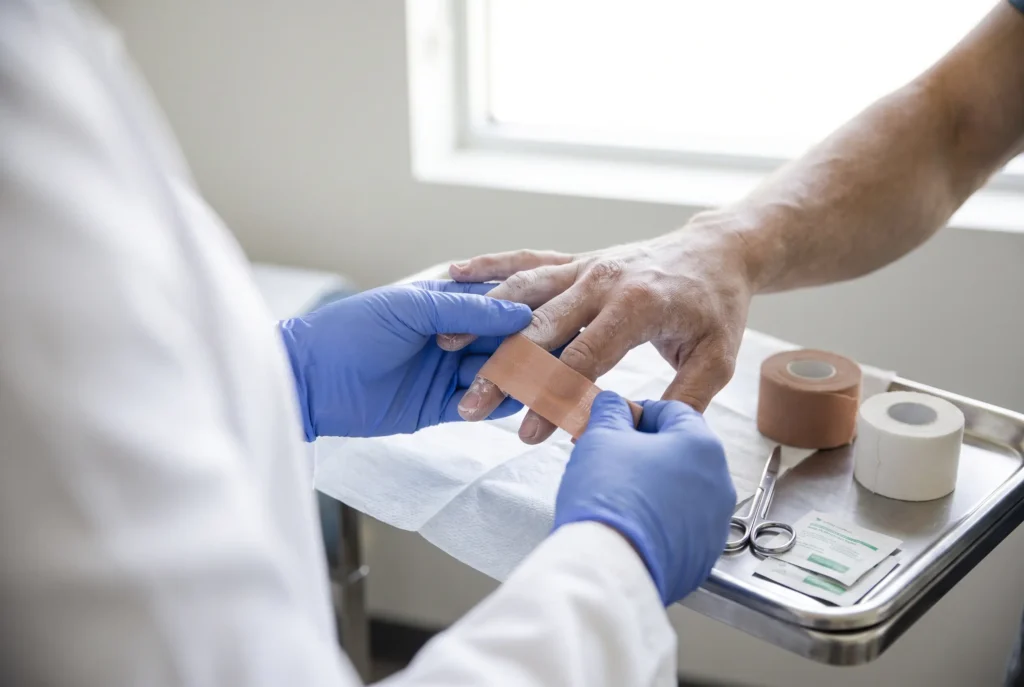
A fast lower, a hand grabbing the rope on instinct, a belay that ran away for half a second. Rope burns look trivial and are not — they are friction burns, which behave like heat burns rather than like grazes, and they get infected here at a rate that surprises people. Rope burn treatment in Railay is about depth, cleaning and keeping it dry in a place where nothing stays dry.
Why a rope burn is a burn, not a graze
Friction generates heat, and a rope running through a hand or across a thigh at speed produces a genuine thermal injury alongside the abrasion. That matters because burns damage tissue at depth rather than only at the surface, and they weep.
A superficial rope burn is red, painful and stings badly. A deeper one blisters or appears pale and waxy in the middle, and paradoxically hurts less in the centre because the nerve endings there are damaged. That combination — a burn that looks worse but hurts less — is the one to be seen about.
Rope burns also frequently carry rope fibres and dirt driven into the wound, which is why they need cleaning rather than just covering.
What to do straight away
Cool it under clean running water for a full twenty minutes. Not two minutes, twenty. This is the single most effective thing anyone does for any burn and it works up to about three hours after the injury.
Do not use ice, which causes further tissue damage. Do not apply toothpaste, oil, aloe straight from a plant, or any of the things you will be offered at the crag. Do not burst blisters.
Cover loosely with a clean non-fluffy dressing or cling film and get it looked at, particularly if it is on a hand.
Hands, thighs and necks
Location changes how much this matters.
Hand burns are the most common and the most consequential for a climbing trip, because the skin over the palm and fingers is exactly what you need for the rest of the week, and a burn across a crease will crack repeatedly every time you close your hand.
Thigh burns from a rope running across the leg are usually larger and more superficial. Neck burns are rare and are taken seriously, because burns near the airway occasionally swell in a way that matters and because the cosmetic result is more visible.
Any burn that goes right around a finger or a limb needs seeing the same day, because swelling inside a complete ring of damaged skin can restrict circulation.
How we treat it
The burn is cooled if that has not been done properly, then cleaned to remove rope fibres and dirt. Depth is assessed — superficial burns heal in a week or two with dressings, deeper ones take longer and occasionally need referral.
Blisters are generally left intact as a sterile cover, and only deroofed when they are large, tense and over a joint where they will burst anyway. The wound is dressed with a non-adherent material so the next change does not strip the healing surface, and you get a schedule for dressing changes.
Tetanus cover is checked. Pain relief matters more than people expect with burns — take it regularly for the first couple of days rather than heroically.
Keeping it clean here
This is the hard part. Sea water, sand, chalk, humidity and sweat all work against a burn, and Railay supplies all five.
Stay out of the sea until it has closed. Rinse with clean fresh water after any beach time and change the dressing once dry. Keep chalk away from it entirely — chalk in an open burn is dirt in a wound, and taping over it to climb traps moisture against damaged skin.
Watch for infection: redness spreading beyond the burn, increasing pain after day two, yellow discharge, or fever. Spreading redness is cellulitis and needs antibiotics the same day rather than after the weekend.
Preventing the next one
Rope burns are almost entirely preventable and the causes are boringly consistent: lowering too fast, letting go of the brake strand, grabbing a running rope by reflex, and belaying in shorts with the rope across the thigh.
Gloves solve most of it for belaying and for any lower where speed is likely. A belay device with assisted braking reduces the consequence of a moment’s inattention. And on a long multi-pitch lower, gloves are not optional in most people’s judgement.
If the burn happened because something went genuinely wrong with the system rather than the technique, it is worth reviewing that before climbing again — a rope burn is often the cheap version of an accident that could have been much worse. If the same incident also produced finger injuries or a fall, mention both.
Frequently asked questions
How much does treatment cost?
A consultation with cleaning and dressing is inexpensive. Larger burns needing repeated dressing changes cost more overall, and each visit is quoted first.
Should I burst the blister?
No. An intact blister is a sterile dressing your own body made. If it is large, tense and over a joint it may be deroofed properly at the clinic, but not by you at the crag.
Can I climb with it?
Not on a hand burn until it has closed. Chalk and tape trap dirt against damaged skin and the wound reopens every time you grip. A thigh burn is less limiting.
How long does it take to heal?
A superficial rope burn closes in about seven to ten days. A deeper one takes two to three weeks, and longer if it keeps getting wet or is climbed on.
Can I swim?
Not until it has closed. Sea water on an open burn is both painful and a genuine infection risk here.
Will it scar?
Superficial burns usually heal without a lasting mark. Deeper ones can scar, and keeping the healed skin out of the sun for six months makes a real difference to how it ends up looking.
A nurse-led clinic, part of the Takecare network
Takecare Clinic Railay is staffed by experienced English-speaking nurses, and works together with Doctor Ao Nang Takecare Medical Clinic in Ao Nang. The two clinics share doctors, records and treatment plans, so a doctor is involved whenever one is needed — reviewing a case, prescribing, or coming over to Railay — and care started on the peninsula continues without repetition if you cross to the mainland. It also means a second clinical opinion is a phone call away rather than a boat ride.
Come in, or we come to you
Takecare Clinic Railay is open 8am–10pm daily on Railay, and reachable 24 hours by phone, WhatsApp and Line — so if something happens after we close, message rather than wait until morning. Walk in without an appointment, call +66 81 718 9080, message WhatsApp or Line. If you would rather not move, ask for a doctor resort visit and we will come to you. For anything that cannot wait for a boat, see evacuation and hospital transfer.