Monkey and animal bite treatment in Railay
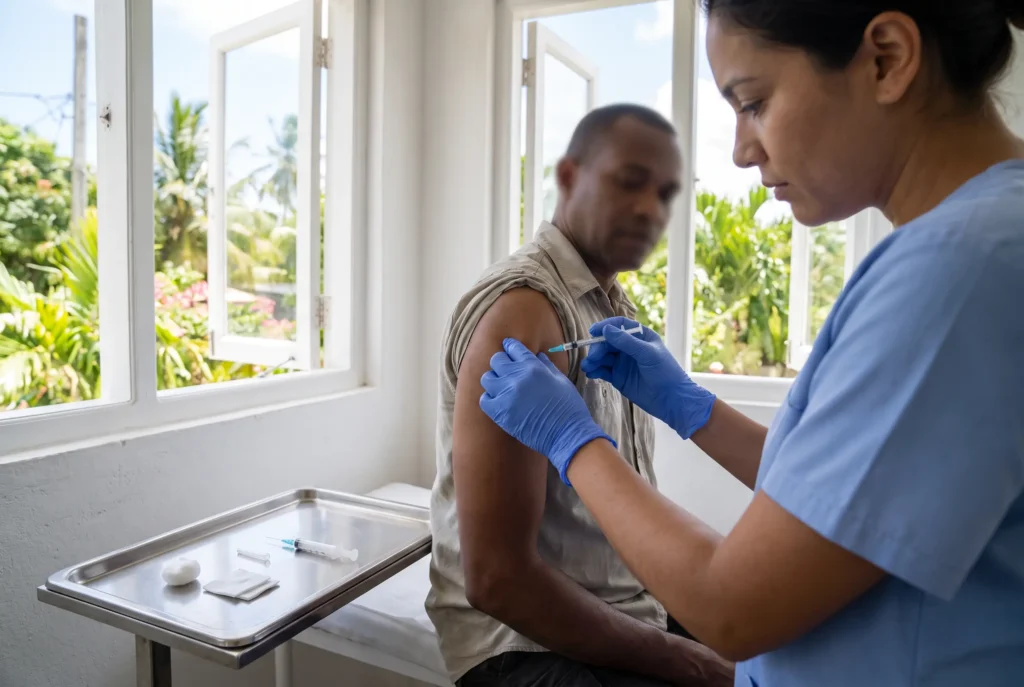
The macaques on the Phra Nang path are bold, fast and entirely unafraid of people carrying food. A bag grabbed, a hand caught, a scratch that barely bled. Monkey and animal bite treatment in Railay means washing the wound properly, starting rabies protection the same day, and treating the ordinary infection that bites reliably cause — all of which is far better done on the peninsula than after a boat.
Wash it for fifteen minutes, now
Before anything else, hold the wound under running water and wash with soap for a full fifteen minutes.
It feels absurd standing at a tap. It is the single most effective step in the entire process and measurably reduces rabies risk before any needle is involved.
Do not close the wound with a plaster or tape, and do not let anyone stitch a bite closed. Wash it, cover loosely, and come in.
Rabies is the reason not to wait
Rabies is present in Thailand and is effectively always fatal once symptoms appear. It is also almost entirely preventable if treatment starts in time. Monkeys, dogs and cats are the animals that matter here, and on Railay it is overwhelmingly monkeys.
The wound does not need to be dramatic. A scratch that barely bled counts, and so does a lick on skin already broken. The animal looking healthy proves nothing — an infectious animal can behave normally for days.
Start the course today — see rabies vaccination. Starting on the peninsula also avoids the awkward situation of needing immunoglobulin at short notice from somewhere that requires a boat.
How monkey bites actually happen here
Almost every one follows the same sequence: someone carries visible food or a drink on the Phra Nang path, a macaque approaches, they hold on to the bag, and the animal takes a hand.
The rules are simple and widely ignored. Do not carry food or drinks openly. Do not hold a bag loosely. Never try to take something back once a monkey has it — a bag of crisps is not worth a rabies course. Do not feed them, and do not let children hold food near them, because children are bitten on the face and hands far more often than adults.
Do not make direct eye contact with a macaque that is posturing, and do not run. Back away slowly and let it have whatever it has taken.
Cat and dog bites
A cat’s teeth are fine and sharp and make deep narrow punctures that seal over within hours, trapping bacteria in the tissue underneath. A cat bite to the hand can become a serious infection within twenty-four hours and is generally given preventive antibiotics rather than watched.
Dog bites cause more visible damage but carry a lower infection rate. Both need washing, assessment and rabies consideration exactly as monkey bites do.
On Railay the resident cats around restaurants are the usual source, generally after someone has tried to pick one up.
How the wound is treated
The wound is irrigated thoroughly and any dead tissue removed. Most bites are deliberately left open rather than stitched, because closing them traps infection — an open bite wound heals with a slightly wider scar and far less trouble.
Exceptions are made for facial wounds, where the cosmetic result matters and blood supply is good. We check tetanus cover, give a booster if needed, and arrange dressing changes over the following days.
Signs of infection to watch for
Come back the same day if you notice:
- Increasing pain after the first day
- Redness spreading outward, especially a streak up the limb
- Swelling, heat and tightness
- Pus or discharge
- Fever or feeling generally unwell
- Difficulty moving a finger, if the bite was on the hand
Trouble bending or straightening a finger after a hand bite needs urgent assessment, because infection in a tendon sheath can permanently affect function — and for a climber that is not a small thing. Otherwise spreading redness is cellulitis and needs antibiotics immediately.
Frequently asked questions
How soon must I start rabies treatment?
The same day if possible. There is no point at which it becomes pointless to start, but sooner is better — and here, sooner also means before the boats stop.
How much does treatment cost?
Wound care itself is inexpensive. The rabies course is the significant cost, particularly if immunoglobulin is needed. The full cost is explained at the first visit.
The monkey looked healthy. Do I still need it?
Yes. An animal can transmit rabies before it appears unwell, and you will never see that macaque again to check. The treatment is safe and the disease is not survivable.
Can a doctor come to me?
Follow-up rabies doses can be given on a doctor resort visit. The first visit is better at the clinic so the wound can be irrigated properly.
Do I need antibiotics as well?
Often yes, particularly for cat bites, hand bites and deep punctures. The nurse decides after examining the wound.
How do I avoid monkeys on the Phra Nang path?
Carry nothing visible to eat or drink, keep bags closed and held firmly, do not feed them, and never try to retrieve something a monkey has taken.
A nurse-led clinic, part of the Takecare network
Takecare Clinic Railay is staffed by experienced English-speaking nurses, and works together with Doctor Ao Nang Takecare Medical Clinic in Ao Nang. The two clinics share doctors, records and treatment plans, so a doctor is involved whenever one is needed — reviewing a case, prescribing, or coming over to Railay — and care started on the peninsula continues without repetition if you cross to the mainland. It also means a second clinical opinion is a phone call away rather than a boat ride.
Come in, or we come to you
Takecare Clinic Railay is open 8am–10pm daily on Railay, and reachable 24 hours by phone, WhatsApp and Line — so if something happens after we close, message rather than wait until morning. Walk in without an appointment, call +66 81 718 9080, message WhatsApp or Line. If you would rather not move, ask for a doctor resort visit and we will come to you. For anything that cannot wait for a boat, see evacuation and hospital transfer.