Climbing Injury Care in Railay
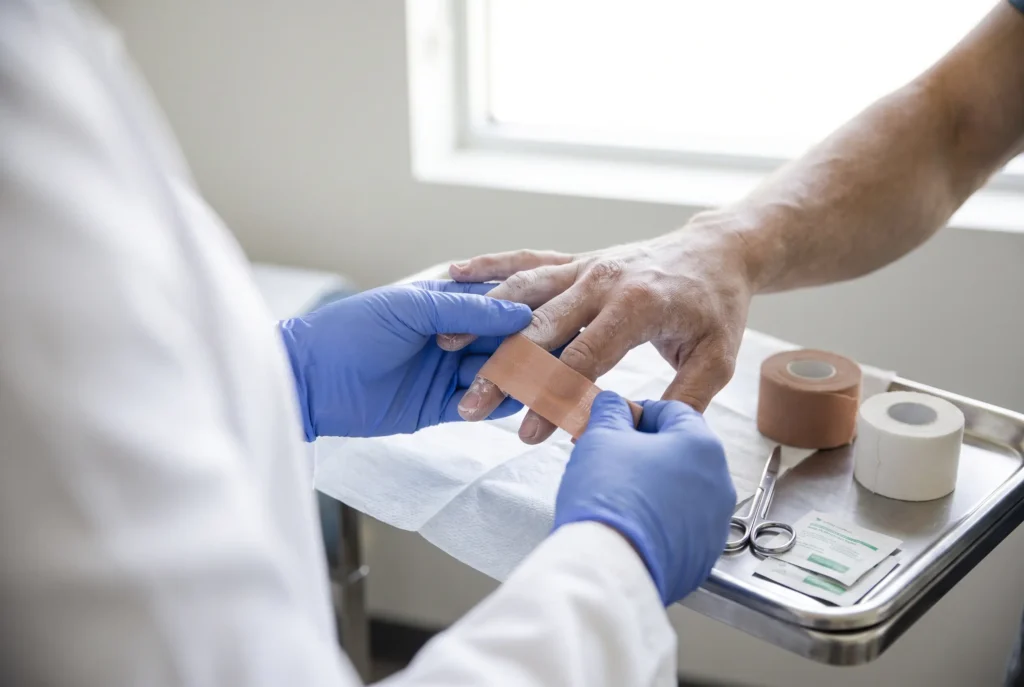
Railay and Tonsai are among the best-known limestone climbing areas in the world, and the injuries here follow that closely. Most are not dramatic — a ground fall from three metres, a finger that went pop on a crimp, a rope that ran through a hand. What they share is that they are all made considerably worse by carrying on. Climbing injury care in Railay means getting an honest assessment on the peninsula, on the day, from someone who understands what you are actually asking.
What we see most
The pattern is consistent across seasons and grades:
- Ankle sprains and heel injuries from ground falls and bouldering
- Finger pulley strains and tendon injuries, usually from crimping
- Rope burns on the hand, thigh or neck
- Elbow and shoulder overuse from too much volume too quickly
- Limestone cuts and abrasions, which are dirtier and sharper than granite
- Head impacts from swinging into rock or being struck by loose stone
- Deep water soloing injuries — heavy water impacts, and cuts from the rock on exit
The most common single presentation is the one that seems least urgent: someone who took a small fall two days ago, has been climbing on it since, and is now unable to weight the foot properly.
Why “just tape it” is often the wrong answer
Climbers are unusually good at self-managing, which cuts both ways. Tape, ibuprofen and rest are frequently right. They are wrong when they are being used to cover a fracture, a full pulley rupture, or a joint that is unstable.
The practical risk here is not the injury itself but the terrain. Every walk on this peninsula is over sand, rock steps and uneven ground, and there is no vehicle to take you anywhere. An ankle that is merely sore on day one becomes a genuine problem on day three of walking to the crag on it.
An examination takes ten minutes and answers the only question that matters: is this something you can climb through, something you should rest, or something that needs an X-ray on the mainland.
What an assessment involves
The nurse examines the joint or the digit specifically — range of movement, stability, exactly where the tenderness sits, and whether you can bear weight or load the tendon.
For ankles there are well-established rules for deciding who genuinely needs imaging, based on where the bone is tender and whether you can take four steps. Most people do not need an X-ray. The ones who do get referred to Krabi Town with our findings, rather than being sent to find out for themselves.
For fingers, the assessment distinguishes a strained pulley, which is managed with taping and load reduction, from a rupture or a tendon injury, which is not. That distinction matters because the wrong answer costs months rather than weeks.
What we can do on the peninsula
A fair amount, and it is worth knowing where the ceiling is:
- Fracture assessment, splinting and strapping
- Wound cleaning, stitches and dressings for rock cuts
- Pain relief and anti-inflammatory treatment
- Taping and load advice for finger and elbow injuries
- Tetanus cover for dirty wounds
- Referral with written findings where imaging is needed
We do not have an X-ray, an MRI or an orthopaedic surgeon. Anything needing those goes to Krabi Town, and we arrange it — see evacuation and hospital transfer.
Head injuries and the thing climbers under-report
Helmet use on Railay is inconsistent, and rock does fall. A knock to the head that seemed minor at the crag is the injury most often shrugged off and least safely shrugged off.
Go to a hospital, not a clinic, and do not wait until morning, if there has been any loss of consciousness however brief, vomiting after the impact, confusion or no memory of the fall, a headache that keeps getting worse, unusual drowsiness, or clear fluid from the nose or ears.
Anyone who has taken a head impact should not sleep alone that night, and someone should check they can be roused normally. On a peninsula where the last boats have gone, that is a decision worth making in the evening rather than at 3am.
Getting back on the rock
Nobody comes to Railay to rest, so the useful advice is about how to return rather than whether to.
For a mild ankle sprain, that usually means a few days off vertical ground, then easy climbing on big holds with strapping, avoiding anything with a hard landing. For finger injuries it means dropping several grades, avoiding crimps entirely, and taping — with the honest warning that pulley injuries reinjure easily and the second one takes far longer than the first.
Two practical points specific to here. Humidity and salt keep skin soft, so cuts and flappers take longer to close than they would at home, and climbing on them reopens them. And every walk-in to the crag is itself load — if you are resting an ankle, resting it means not walking to Tonsai and back to watch.
Frequently asked questions
How much does an assessment cost?
A consultation with examination and strapping is inexpensive. X-ray referral, wound treatment or medication is added and quoted before it is done.
Do you have an X-ray?
No. We assess you and refer to a hospital in Krabi Town when imaging is needed, sending our findings so nothing is repeated on arrival.
Can I keep climbing on it?
Sometimes, and you will be told honestly. The point of the examination is to separate injuries you can work around from ones where climbing on it turns three weeks into three months.
Can a doctor come to me if I cannot walk?
Yes. A doctor resort visit covers Railay West, Railay East, Phra Nang and Tonsai on foot, which matters on a peninsula with no vehicles.
Will my travel insurance cover a climbing injury?
Often not. Many policies exclude rock climbing entirely, or restrict cover to guided climbing below a grade, and deep water soloing is excluded more often still. Check before you climb — see travel insurance claims.
I hit my head but felt fine. Should I be checked?
Yes, and particularly before nightfall. Symptoms can appear hours later, and on Railay the practical options narrow considerably once the boats have stopped.
A nurse-led clinic, part of the Takecare network
Takecare Clinic Railay is staffed by experienced English-speaking nurses, and works together with Doctor Ao Nang Takecare Medical Clinic in Ao Nang. The two clinics share doctors, records and treatment plans, so a doctor is involved whenever one is needed — reviewing a case, prescribing, or coming over to Railay — and care started on the peninsula continues without repetition if you cross to the mainland. It also means a second clinical opinion is a phone call away rather than a boat ride.
Come in, or we come to you
Takecare Clinic Railay is open 8am–10pm daily on Railay, and reachable 24 hours by phone, WhatsApp and Line — so if something happens after we close, message rather than wait until morning. Walk in without an appointment, call +66 81 718 9080, message WhatsApp or Line. If you would rather not move, ask for a doctor resort visit and we will come to you. For anything that cannot wait for a boat, see evacuation and hospital transfer.